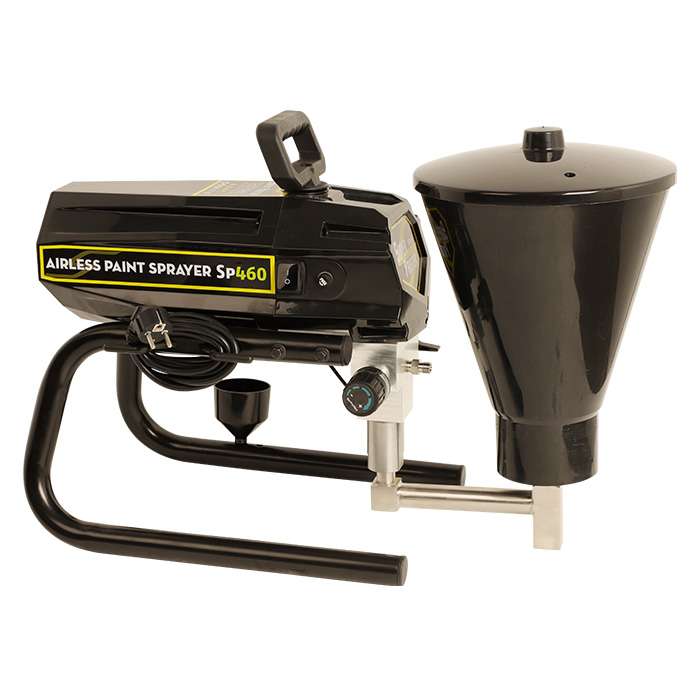
Airless Sprayer Safety
Airless Sprayer Safety
Airless Sprayer Safety
The most effective way to become familiar with operators safety and safety procedures is to read your owners manual THOROUGHLY. If you do not have the manual that came with the sprayer you are operating we encourage you to find a copy as airless sprayers are different from brand to brand and model to model, many can be downloaded.
Your safety is important! Careful use of airless spray equipment will prevent injuries!
Two major types of safety hazards exist with an airless paint sprayer:
Fire and Explosion
Fire and/or explosion can occur if the sprayer is spraying or flushing flammable fluid in an area where air circulation is poor and an open flame or sparks are present.
Many paints, solvents and their vapors will ignite, causing a fire or explosion which may burn you.The most common cause of a fire or explosion is the ignition of flammable vapors by an open flame or spark.
With an ungrounded spray system, the flow of fluid through the sprayer and hose may create enough static electricity to cause a spark from the gun. That spark can ignite flammable vapors.
Injection of spray material
Injection can be caused by high pressure fluid passing through a small opening, such as the spray tip or hose leak. This creates a high speed stream of atomized fluid which is powerful enough to pierce your skin and enter your body.
Injection occurs when the high pressure fluid pierces your skin.
The most common causes of injection are:
- Placing your hand or body too close to the spray tip.
- Grabbing a leaking hose or fitting, even if you are wearing gloves or using a rag.
The injury might look like “just a cut” but don’t be fooled! – It is a serious wound!
Get IMMEDIATE hospital treatment for any injection wound. Tell the doctor what fluid was injected.
“An ounce of prevention is worth a pound of cure” Benjamin Franklin
Prevention
To help prevent a fire and/or explosion when spraying flammable or potentially flammable materials, always;
Spray in well-ventilated areas with good air movement. Use only non-sparking fans if one is needed.
Remove, extinguish or unplug all ignition sources such as…
cigarettes
pilot lights; stoves & ranges, water heaters, furnaces
all electric appliances
Put gas powered sprayers outside the building and run the hose into the room to be sprayed. Even though the sprayer is outside, always ground the sprayer to prevent static sparking.
Keep the work area free of debris that could contribute to a fire such as;
open or empty paint/material cans
open or empty solvent/thinner cans
rags, especially used ones
paper, masking
Prevent sparks and static sparking
Use only grounded hoses
Check hoses periodically for electrical continuity using and ohm meter.
Tape wall switches to help prevent them from being used
Use only grounded metal pails when spraying/painting, flushing or cleaning
Connect the pail to a true earth ground according to your local electric code.
Ground the sprayer regardless of the power source!
Electric Powered Sprayers
Plug into a properly grounded 3-wire outlet
You should check to make sure that the outlet is actually grounded. (see an easy and inexpensive way to)
Be sure the grounding prong is in place on the cord
If it is missing replace the plug
Use a grounded extension cord of at least 12 gauge wire and rated for 15 amps or more
(more you should know about extension cords)
Gas engine powered sprayers and air (pneumatic) powered sprayers
Connect the pail to a true earth ground according to your local electric code.
To help prevent injection injuries…
DP airless spray guns have a tip guard which helps prevent your hand or body coming too close tot he spray tip
Have the tip guard on the gun when spraying
Always use the spray gun trigger safety when not spraying
Relieve fluid pressure when cleaning or servicing any part of the equipment. To relieve pressure, shut off the sprayer, trigger the gun, and open the pressure drain valve.
Always point the gun away from yourself and others
Do not try and stop leaks with your hand or body
Follow the instructions manual when it comes to proper flushing methods, or visit our airless sprayer cleaning page
Remove the spray tip, reduce the material/fluid pressure and immerse the gun nozzle in the fluid when flushing
To help prevent accidentally triggering/ spraying the gun…
Put the trigger safety latch on when you are not spraying
This is a good habit to get into
Always keep the trigger guard on the gun! The guard helps prevent the trigger from being bumped or otherwise accidentally triggered
Other safety considerations
Wear safety glasses to protect your eyes from spray material / paint or solvent
Wear a respirator when using toxic or noxious paint or solvent.
Follow the material manufacturers guidelines to select the correct respirator and or cartridges
Read and save the instruction manuals supplied with the equipment. The manuals contain important information on airless spray safety
Every day thousands of painters safely use DP airless spray painting equipment by following these simple and effective precautions.
Please protect your safety by properly preparing the jobsite and carefully using the spray equipment. Play it safe for safety’s sake.
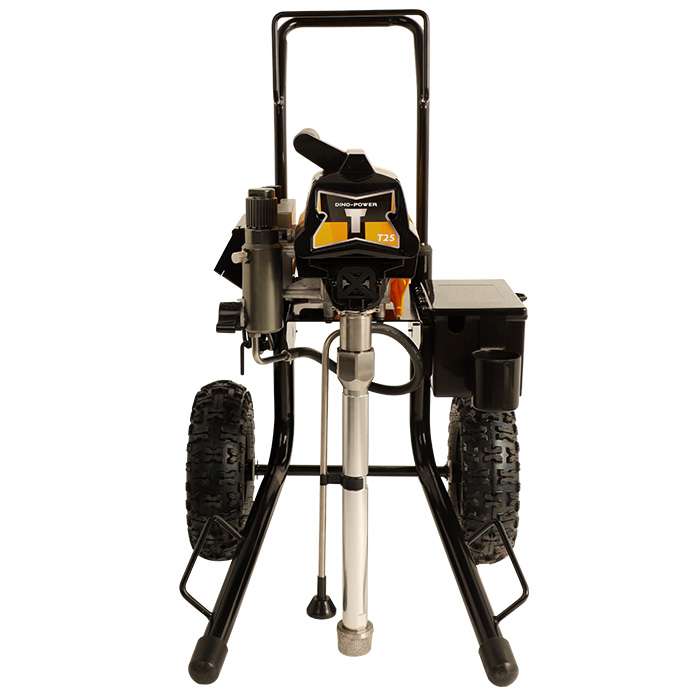
motor-power 1500W
max-tip-size 0.023"
flow-rate 2.5L/min
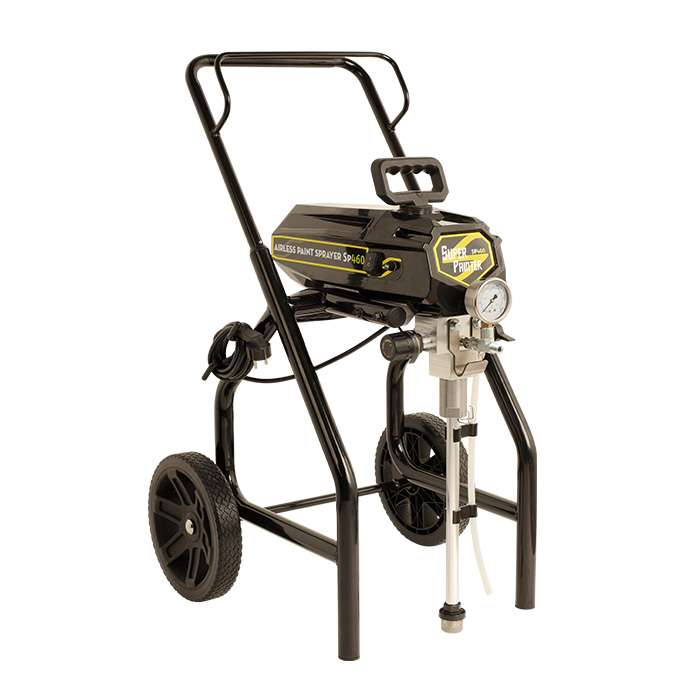
Motor power 1000w
Max. tip size 0.021"
Flow rate 1.8L/min
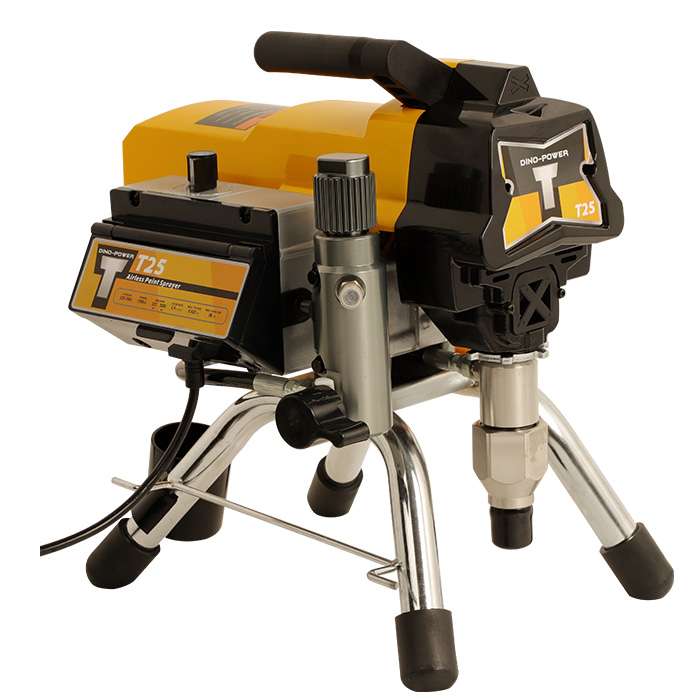
motor-power 1500W
max-tip-size 0.023"
flow-rate 2.5L/min