Drywall Textures
Wall textures are commonly used to finish interior wall surfaces and hide taped drywall seams along with other imperfections. At the same time these textures transform flat walls into a finish that reflects light and adds interest to any room. With a variety of formulas and textures to choose from, it is easy to add interest to the walls in your home.
Orange Peel (also called splatter or eggshell) looks like the skin of an orange. It is a great alternative to a smooth finish because it is subtle but easily hides wall and ceiling imperfections. It’s durable and easily to clean making it a popular texture in rental homes, commercial buildings, and new construction. Its bumpy yet minimal finish also goes well with most décor, including modern styles.
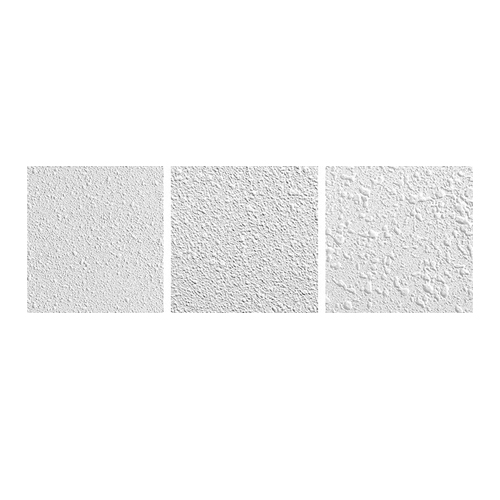
Orange Peel / splatter / eggshell
The rustic flattened textures called Knockdown are reminiscent of stuccos and skip trowels. It exudes a casual elegance and lends itself to a wide range décor including Southwest and Mediterranean. It’s also commonly used to help hide minor surface imperfections. Dust can gather within ridges, making it slightly more difficult to clean than Orange Peel.
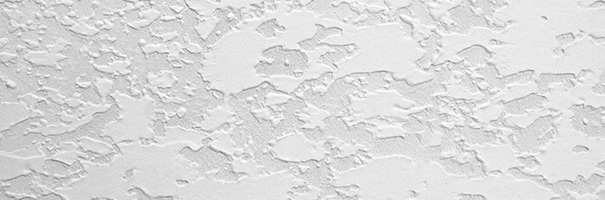
Knockdown Texture
Popcorn texture (also known as Acoustic) is widely used to finish ceilings because it is cheap, easy to install, hides many imperfections and has noise dampening qualities.
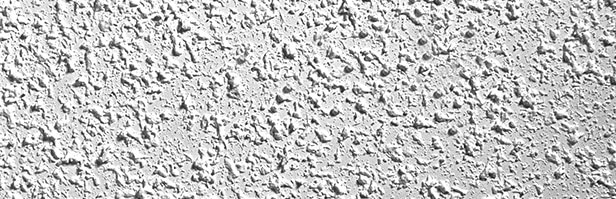
Popcorn texture
One thing homeowners like about working with compound is that if you apply too much or incorrectly position it, you can simply wipe away the mistake and begin again.
- Before going to town and using compound to texture walls, first make sure the walls are clean and completely dry.
- Water down the compound slightly prior to application so that it has the consistency of thick pancake batter.
- Apply taping or joint compound to your wall with a trowel or a wide compound knife.
- Dab a sponge into the compound, then press the sponge against the wall repeatedly to create an overall texture.
- Dab on additional compound as necessary.
- Let dry and then paint.
TEXTURING WALLS WITH PAINTING MACHINES
If you wish to add wall texture to a very large surface or the walls in several rooms, consider renting a drywall texture sprayer. Powered by compressed air and featuring a gun-like nozzle like DP-T3 T7 texture sprayer, a sprayer speedily covers surfaces in joint compound, producing, among a variety of other looks.
The pattern a texture sprayer creates depends on three variables: the type of compound used, the nozzle selected, and the amount of air that is propelling the mud. There’s no harm in experimenting, as the compound can be easily sponged off if you end up with a texture that is not to your liking.
Be advised that if you decide to employ a sprayer in a home decked out with furnishings and finished floors, it’s essential to cover anything that you don’t want hit by mud.